
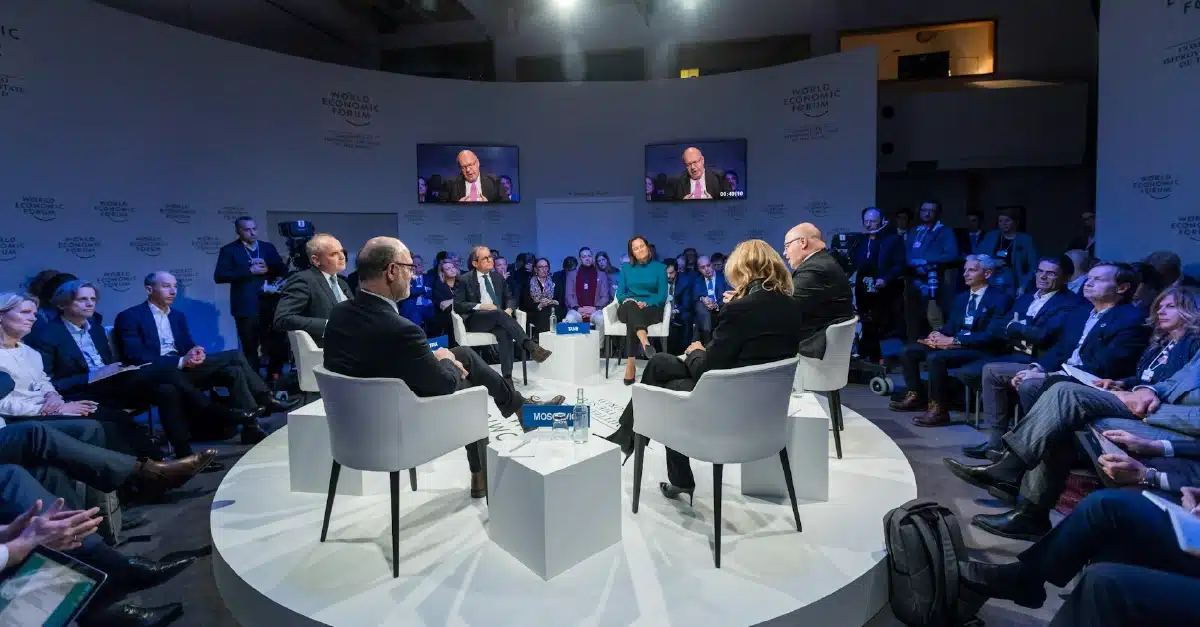
Organising a successful press conference is not simply a matter of inviting a number of journalists and waiting for them to ask questions. To genuinely generate coverage, visibility and reputation, it is essential to work on every detail before, during and after the meeting with the media. When a company prepares a press conference properly, it not only increases its chances of securing media coverage, but also conveys professionalism, credibility and control over its message.
When Is It Worth Holding a Press Conference?
Planning and the relevance of the message are key factors in the success of a media event. As stated in the Good Practice Guide on the relationship between communications professionals and journalists, promoted by the Association of Public Relations and Communication Consultancy Firms (ADECEC) and the Spanish Association of Communication Directors (Dircom): “If it does not represent a real difference in terms of news content, journalists would rather receive a press release or statement than have to travel to a press conference. Regarding the latter, they generally consider that more are organised than necessary.”
One of the most common questions is whether there is really a sufficiently noteworthy reason to invite the media. The answer is straightforward: a press conference should deliver genuinely newsworthy information and have an angle that is of interest to journalists.
Not every announcement warrants a press conference. Some examples of situations that may justify holding one include:
Launch of a New Product or Service
If a company is introducing a genuinely significant new product or a new business line, a press conference can be a suitable way to announce it. However, this will depend on the type of company. For a business that launches a large number of products each year, it would not make sense to organise a press conference for every launch. Instead, it would be more advisable to use the press conference to present the entire product range.
Announcing Results, Milestones or Investments
A good time to use this format is to announce major acquisitions, expansions, strategic agreements, significant changes in leadership or particularly noteworthy results. This type of press conference is likely to be of particular interest to business journalists, especially when it involves large international companies or publicly listed businesses.
Managing a Crisis or Sensitive Issue
In these situations, it is more important than ever to have all communication materials and resources fully prepared: the company’s position, key messages, potential questions, challenging issues and spokespeople trained to respond with confidence and consistency.
However, a press conference is not always the best option when dealing with a crisis. If there is a risk that the event could backfire on the brand, amplify the issue or create further media pressure, it may be advisable to consider other alternatives, such as preparing a reactive statement, giving controlled interviews or holding one-to-one meetings with the journalists following the story most closely.
The key is to assess whether the format will genuinely help communicate the company’s message or, on the contrary, make it more difficult to maintain control over the communication.
Before the Press Conference: Preparation Is Everything
The preparation phase of any press conference largely determines the success of the event. Good organisation minimises unexpected issues and ensures that the message is communicated clearly.
1. Define the Objective and Main Message
Before sending out the invitation, we should answer two questions: What do we want to communicate? and What do we want to achieve? The main message should be clear, concise and easy to remember. The more specific it is, the more likely journalists are to report it accurately. It is also advisable to prepare two or three secondary messages that help reinforce the main idea.
2. Choose the Right Date, Time and Venue
Logistics have a direct impact on attendance. Avoid dates close to public holidays, major events or periods of heavy news coverage. In general, early mornings tend to work better, as they give journalists enough time to prepare their stories and publish them on the same day.
The chosen venue should meet several requirements to make journalists’ work easier and ensure that the event runs smoothly:
- Be easily accessible, both by public transport and by car, to encourage attendance and prevent the location from becoming an obstacle for journalists.
- Provide comfort and the necessary facilities for attendees, such as registration areas, cloakrooms, rooms for one-to-one interviews or parking.
- Have enough space for cameras, sound equipment and photographers, allowing the media to work comfortably and capture high-quality images and statements.
- Reflect the company’s identity and values, as the setting is also part of the communication and helps reinforce the message the company wants to convey.
3. Conduct Tests and Rehearsals Before the Press Conference
One of the most common mistakes when organising a press conference is assuming that everything will go smoothly without carrying out any prior testing. Rehearsing the event in advance makes it possible to identify technical issues, adjust timings and better prepare the spokespeople.
Ideally, the rehearsal should be as realistic as possible, simulating both the opening presentation and the Q&A session. This helps determine whether the pace is appropriate, whether the key messages are clearly understood and whether the spokespeople respond naturally and confidently. This type of simulation also helps coordinate and improve logistical aspects, such as the speakers’ entrance, the use of presentations, sound, and the positioning of cameras and photographers.
If the press conference is hybrid (a physical event with an online broadcast) or fully virtual, this becomes even more important. It is essential to test the streaming platform, connection, microphones, cameras and all audio and video systems in advance to avoid technical issues during the event.
4. Choose the right media outlets
Not all press conferences are of interest to every journalist. That is why a key part of the job is to draw up a targeted invitation.
It is better to invite fewer media outlets, but ones that are genuinely interested, than to send out a mass mailing without any targeting. Analyse and identify which journalists cover the sector, what angle they usually take, and what might be of interest to them.
5. Prepare Supporting Materials
A press conference works much better when journalists receive useful and well-organised information. Having supporting materials prepared in advance not only makes the media’s job easier, but also helps ensure that the company’s key messages are communicated clearly and consistently. Some of the main resources worth preparing include:
- Press kit or press release. It should include the main facts, figures, context and relevant statements from the company’s spokespeople. The clearer and more organised it is, the easier it will be for journalists to work with the information provided and, consequently, with the company’s key messages.
- Images and audiovisual resources. Providing photographs, videos and graphic assets makes journalists’ work considerably easier, particularly in digital media and television, whose coverage relies heavily on this type of material.
- Internal Q&A document. Preparing a list of potential questions, including challenging ones, helps ensure that spokespeople respond with confidence and consistency.
During the Press Conference: Clarity, Pace and Approachability
The event itself is a decisive moment. Everything that has been prepared beforehand needs to be executed smoothly and professionally.
Pay Attention to the Presentation
Appearance matters. The space, lighting, positioning of the spokespeople and tone of the presentation all have a direct impact on how the media perceive the event.
A press conference that is too long or poorly organised can quickly lead to a loss of interest. Ideally, the main presentation should not exceed 20 or 30 minutes, followed by a sufficiently long Q&A session.
Choose the Right Spokespeople
The best expert is not always the best spokesperson. The person speaking should be able to communicate clearly, convey confidence and respond naturally. To ensure this, it is advisable for the spokesperson to undergo prior preparation or media training, particularly when it is an important or sensitive media appearance.
Handle Questions Transparently
Journalists’ questions are an opportunity, not a problem. They allow you to expand on the message, clarify doubts and demonstrate approachability. Avoiding questions or becoming defensive can generate more distrust than the answer itself. If you do not have a specific piece of information, it is better to acknowledge it and, whenever possible, commit to providing it afterwards.
After the Press Conference: The Work Is Not Over
Many companies make the mistake of thinking that a press conference ends when journalists leave the room. In reality, there is still another phase to consider, and the work that follows is just as important as everything done up to that point.
Send the Information to Those Who Attended and Those Who Could Not
Once the press conference is over, it is advisable to quickly send the press release, images and any additional materials. It is also worth sharing these with media outlets that were unable to attend, as they may still be interested in covering the story.
Follow Up Personally
Post-event follow-up can make the difference between simple attendance and quality media coverage. Calling or contacting specific journalists allows you to answer questions, facilitate additional interviews, offer exclusive statements and confirm publication timelines. It can also serve as a reminder of the event.
Measure the Results
To determine whether the press conference has been truly effective, it is necessary to analyse the results. It is not enough to look at attendance or the number of pieces of coverage generated; it is also important to measure the reach of the event and check whether the key messages were communicated correctly. Some of the main indicators include:
- Number of attendees. This data helps determine whether the event was sufficiently appealing and whether the media selection was appropriate.
- Coverage generated. Analyse how many media outlets published the story, which messages they highlighted and the overall tone of the coverage.
- Analysis of the quality and tone of the coverage. Beyond the number of media hits generated, it is essential to assess the quality of the coverage. Not all media appearances have the same value: in-depth coverage in a specialised outlet may be more relevant than several superficial mentions in major general-interest media.
It is also important to assess the tone of the coverage: whether it is positive, neutral or negative, and whether the company’s key messages have been interpreted correctly. A successful press conference is one that manages to turn a corporate message into a newsworthy story for both the media and the audience.
The Importance of Having a Communication Strategy
Organising a successful press conference requires a strategy. From selecting journalists to post-event follow-up, every stage has an impact on the outcome. That is why many companies choose to work with a communications agency that can coordinate the entire process and ensure that the message reaches the right audiences.
At LF Channel, we help companies across different sectors design media events, prepare spokespeople and maximise the impact of their media relations. A press conference is not just an event; it is an opportunity to build reputation and visibility.
