
For much of this year, media attention has been focused on the FIFA World Cup 2026. Brands around the world are looking to secure their place in the narrative of football’s biggest tournament, driven by its scale and global reach. Today, you no longer need to be an official sponsor to get your brand talked about. With a well-defined communication strategy, any brand can become part of the conversation.
And it is no longer just about creativity. In such a fragmented media landscape, simply appearing on television during matches is not enough. Brands need to build a story that also lives on mobile devices, across social media platforms, and within public conversations. Multiscreen consumption has become the norm, while content creators have taken on an increasingly strategic role in campaigns, often becoming just as important as — or even more influential than — traditional media investment. Knowing how to navigate and leverage this ecosystem is what now makes the difference between a brand that stays in people’s minds and one that gets lost in the noise.
Because there is a difference between providing the assist and scoring the goal, we take a look at the communication and PR campaigns that successfully finished the play during the FIFA World Cup 2026, while also highlighting some advertising initiatives that helped shape the final outcome.
Levi’s and the Power of a Blank Canvas
As mentioned earlier, brands no longer need to be official sponsors to secure a place in the conversation around the world’s biggest football tournament. Levi’s has successfully proven this point.
One of the FIFA World Cup 2026 venues hosting major matches throughout the tournament is Levi’s Stadium, the iconic venue named after and sponsored by Levi’s. However, FIFA’s “clean stadium” regulations require any branding from companies that are not official tournament sponsors to be covered. Since Levi’s is not an official sponsor, the company had to hide the stadium’s own logo behind a white covering, one that, despite concealing the branding, still hinted at its iconic silhouette.
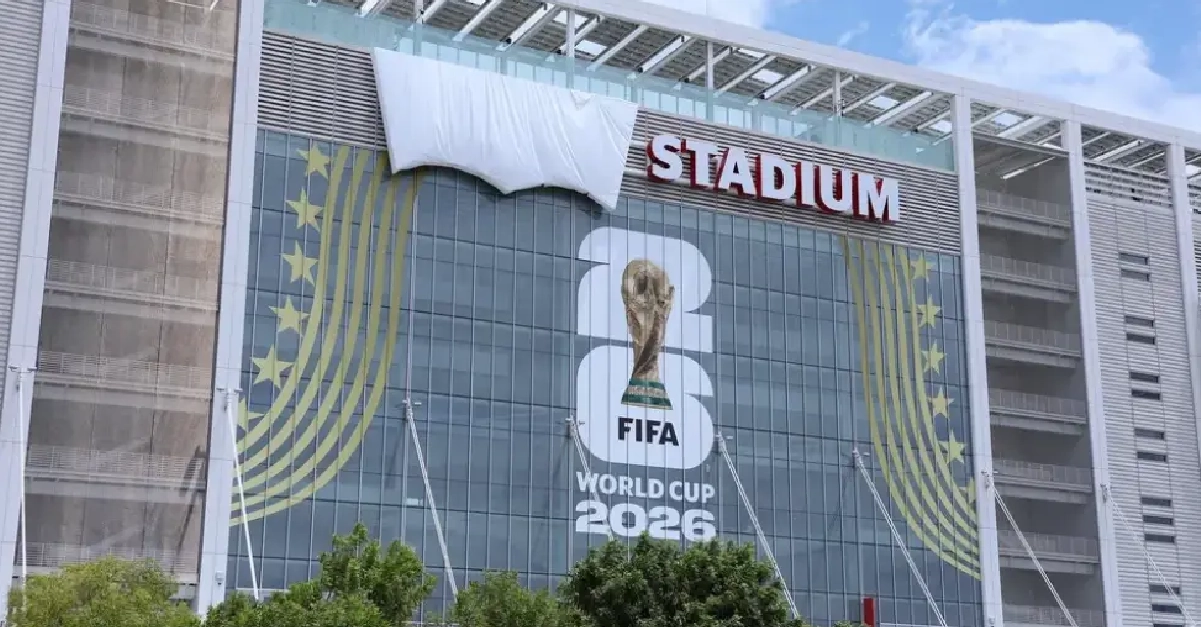
Image from Forbes Argentina.
Far from detracting from its visibility, the silhouette was enough for fans to recognise whose logo it was, and Levi’s seized the moment with a special rebranding: “Welcoming the world to the beautiful [redacted] stadium!”
The brand didn’t stop there; it brought the banner into the product range with a limited-edition collection under the slogan “So everyone knew? The limited-edition [redacted] tee is now available on levi.com”, The limited-edition [censored] T-shirt is now available on levi.com”), extending the viral buzz to an item that its followers could buy and wear.
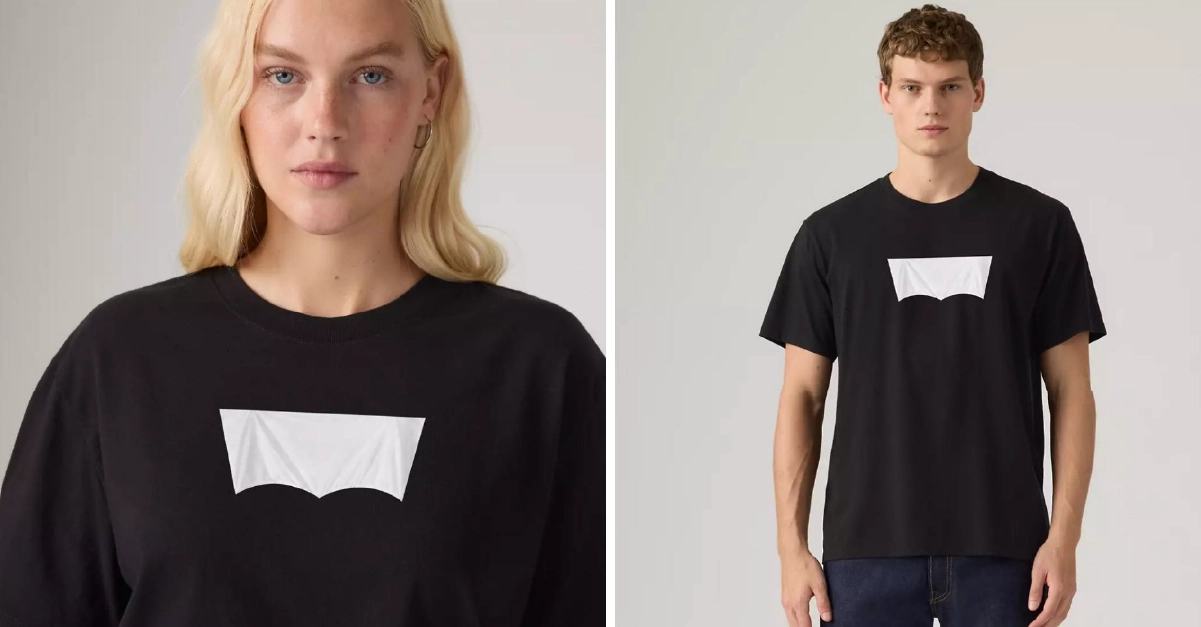
Image from Reason Why.
Levi’s turned what could have been a blow to its visibility into a brilliant communications campaign; without spending a penny on media, it managed to get people talking about its brand in the midst of the controversy surrounding FIFA’s ban on unofficial sponsors. A lesson in how the best communications campaigns don’t always stem from a big budget, but from knowing how to read the situation and react quickly.
Jumpers
Jumpers is building a highly recognisable narrative centred on humour, boldness and the ability to capitalise on topical issues without having to play by the ‘written rules’.
Against this backdrop, the company orchestrated one of the most significant moves in its history: the official sponsorship of the Spanish national team during the FIFA World Cup. The constraints were clear: a limited budget and fierce competition from other brands. The solution? To sponsor the official Spanish national team, but in pétanque.
To announce this, Madrid woke up to a huge banner on which the brand proudly declared itself to be the sponsor of the Spanish national team. As this took place just days before the start of the tournament, the advert led people to believe that Jumpers was sponsoring the national football team. However, at the bottom of the banner it was clarified: “Pétanque”.

Image from ElPublicista.
It didn’t take long for the impact to be felt. Both the media and social media picked up on Jumpers’ new sponsorship deal, proving that the move had paid off. The brand has built a very distinct personality through visual campaigns that are direct, humorous and easy to understand.
Rather than a one-off initiative, this move confirms a highly consistent communication strategy. Jumpers is not trying to compete with other brands for the centre of the pitch; instead, it prefers to carve out its own space, differentiate itself, and build a recognisable place in the minds of its audience.
Adidas and “Backyard Legends”
Another standout campaign came from sportswear brand Adidas, which joined the World Cup conversation with an advertising spot featuring an all-star lineup that brought together Messi, Bad Bunny, and Timothée Chalamet, alongside sporting legends such as Zidane and Beckham, among others.
The piece goes far beyond a conventional advertisement thanks to its scale and creative approach. This production blends football, cinema, and music in a way rarely seen before. The unconventional way in which these icons from different fields are brought together generates a level of media interest that traditional advertising spots do not usually achieve.

Image from Marketing Directo.
Beyond the advertisement itself, the crossover generated a significant volume of social media interactions that extended far beyond the campaign, turning an advertising piece into a conversation that reached audiences beyond football fans. And that is precisely why it deserves a place on this list. While its main vehicle was pure advertising, its ability to generate headlines, media coverage, and conversation on its own is exactly what every communication campaign aims to achieve.
Air Transat
It is widely known among football fans that the average price of match tickets is often excessively high, and this is especially true during the FIFA World Cup. In some cases, ticket prices have even doubled or tripled the cost of a transatlantic flight. This has become a recurring topic of conversation, as reflected across social media platforms, and Canadian airline Air Transat identified an opportunity for newsjacking.
Rather than staying on the sidelines, the airline made this conversation the centrepiece of its campaign. The idea was to compare, in real time, the price of tickets for each national team’s matches with the cost of flying to those countries, including destinations such as France, Portugal, and Mexico.
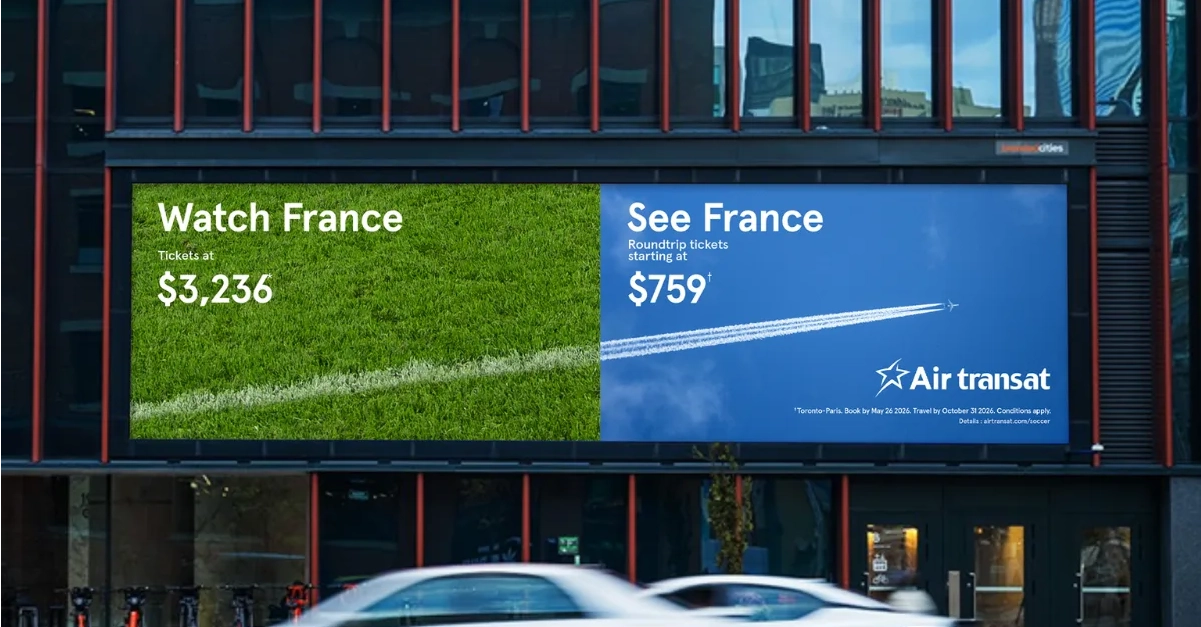
Image from Marketing Directo.
The strength of this campaign lies precisely in the same principle that drives successful public relations: joining an existing conversation with messages that add value. It identified a genuine issue, in this case, audience frustration, and provided an ingenious response. Air Transat did not create the conversation, far from it. Instead, the airline understood how to be in the right place at the right time, turning an existing debate into an effective example of newsjacking.
The FIFA World Cup 2026 leaves us with one clear lesson: winning the conversation depends on understanding the moment and knowing how to respond quickly and strategically. These opportunities rarely happen by chance, and this is where the expertise of a strong PR agency can make all the difference.
At LF Channel, we help brands turn key moments into stories that connect with their audiences and create meaningful impact. Want to discover how to take your communication strategy to the next level? Get in touch with us.
