
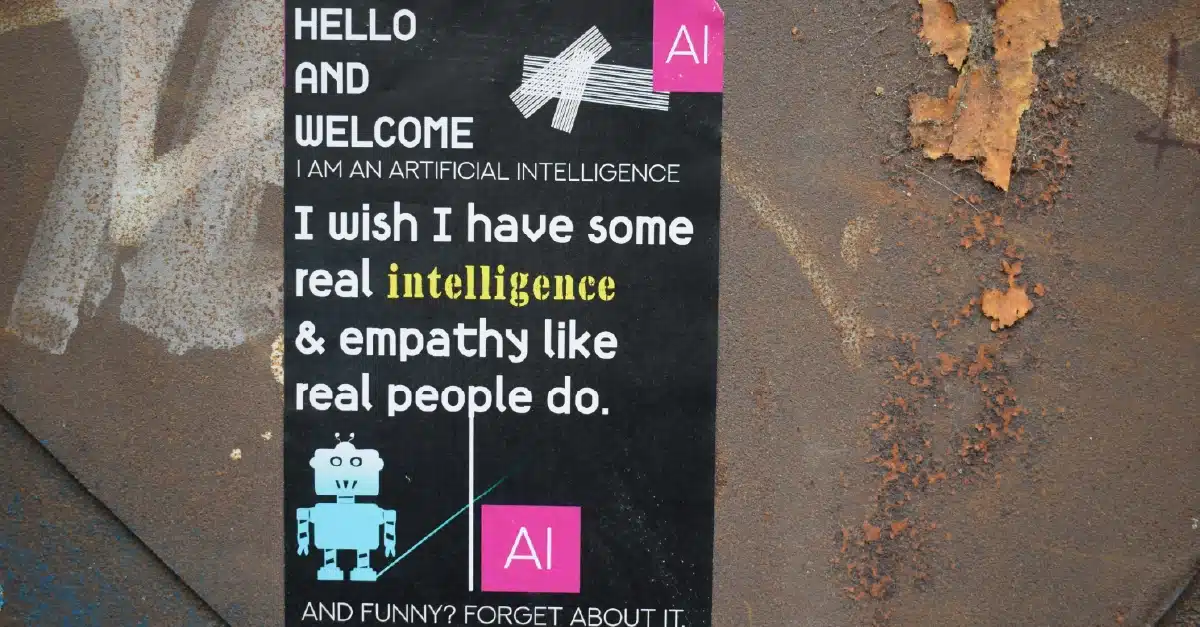
There is much talk about the use of artificial intelligence in the communication sector, and yet, it is rarely shared in concrete terms what exactly a communication agency does with AI tools on a day-to-day basis. At LF Channel, we have decided to be transparent about it: yes, we use AI in several of our internal processes, and in this article, we want to explain where, how, and, above all, what its real limits are when it comes to thinking and designing communication strategies.
Because the debate on artificial intelligence and communication should not be limited to whether “AI is going to take our jobs,” whether it is a passing fad, or if it is a new tech bubble. The key lies in analyzing in which operational tasks it can help us be more efficient and in which ones human judgment or criteria remains, quite simply, irreplaceable.
The Communication Sector Speaks Clearly: AI is No Longer Optional
The industry context helps us understand why this debate is urgent. According to the State of Communication in Spain 2025 Study by Dircom, artificial intelligence is consolidating as the great challenge for the communicative function on the 2025–2028 horizon, above any other priority, and this is what almost 80% of the professionals who participated in the survey believe. Furthermore, the debate is no longer limited to the use of technology as a productive tool, but encompasses ethical and security issues that the sector is beginning to regulate.
At a business level, the data shows that the adoption of artificial intelligence in Spain continues to accelerate. According to CaixaBank Research, based on data from the INE’s Survey on the use of ICT and e-commerce in companies, the percentage of Spanish companies with 10 or more employees using AI technologies rose from 8% in 2021 to 21% in 2025, while in large companies, adoption is approaching three out of five. However, this progress remains uneven, and the main barriers are no longer merely technological, but are related to the availability of qualified personnel and the development of skills. In this context, ONTSI points out that 78% of workers believe their company should provide specific training and tools to work effectively with AI, evidencing that the main challenge is no longer incorporating AI, but knowing how to use it to generate value.
Taking this context into account, we at LF Channel have been putting our own approach into practice for some time now.
Where We Apply AI in LF Channel Processes: Specifics Matter
One of the issues that worries us professionals most when talking about AI and communication is the tendency to stick to generic discourse. At LF Channel, we prefer to explain precisely in which processes we integrate it, because we believe that transparency about the use of this technology is part of our credibility as an agency.
Media Monitoring and Journalist Mapping.
Media monitoring is one of the most time-consuming tasks in any communication agency. Identifying what topics each journalist writes about, in which media they publish, how frequently, and what angle they usually take is work that consumes many hours.
To automate this, we have incorporated AI tools into this workflow, allowing us to systematize the tracking of coverage and topics, so our consultants can enter every conversation with a journalist having read the latest relevant information, without needing to manually track each profile.
This process does not replace the human relationship with journalists, which remains the core of our work; in fact, it frees up time to cultivate quality ties instead of getting lost in spreadsheets and web searches.
Elaboration of Result Reports.
Reporting is a fundamental task for demonstrating the impact of a communication plan, but its preparation can be tedious and repetitive when it comes to gathering and structuring data. AI helps us here to automate the collection and organization phase of information, coverage metrics, reach, or impact quality.
Meanwhile, our work focuses on consulting; the LF Channel team dedicates its expertise to data analysis, its interpretation, and, based on that, to providing the corresponding strategic recommendations. Because a report is not valid merely for the numbers it gathers, but for the conclusions and findings that the analytical capacity of professionals is able to explain so they translate into clear actionable business insights for the client.
Benchmarking.
When a client wants to understand how their competition is communicating (what messages they release, in what media they appear, what narratives they build), a significant part of this work is pure gathering of structured information. At LF Channel, we have integrated artificial intelligence to streamline the competitor analysis phase, which allows us to get a more complete picture of our clients’ competitors’ media presence in less time. The strategic reading of that picture, however, remains 100% human.
Sector analysis in RFP processes.
When we participate in Request for Proposal (RFP) processes, one of the most demanding phases is the rapid analysis of the prospective client’s sector: its players, media dynamics, key topics at local and regional levels, among other factors. Using AI allows us to perform more comprehensive sectoral analyses in less time, which is especially useful when RFP deadlines are tight and the depth of the analysis can make the difference between a differentiated and a generic proposal.
What AI cannot do: critical thinking has no substitute
Following all of the above, we want to be equally clear about something we consider fundamental: artificial intelligence is just another technological tool, and like any other, its value depends on who uses it and how they do it. This means you must know how to use it, and that also implies knowing when not to.
AI can process enormous volumes of information in a short time, identify patterns, structure data, and generate drafts. But it cannot understand the political context of a client operating in a regulated sector. It cannot anticipate how an investigative journalist will react to a press release. It cannot judge whether the timing is right to release a message, nor what tone works in a reputational crisis. And, of course, it cannot design a narrative that emotionally connects with a specific audience, nor know which relationships must be protected when a client faces media pressure.
Designing and implementing a communication plan still requires professional judgment, intuition, and a deep understanding of context, traits that only extensive, proven experience can provide. AI does not replace that judgment, which is inherent to human reasoning; at best, it gives it more time and better information to be exercised.
At LF Channel, we have been working with clients across a range of industries for over 30 years, learning from our regular discussions with specialist journalists and gaining a deep understanding of how to build brand reputation in complex markets such as Spain and Europe.
How we integrate AI responsibly
At LF Channel, there are a few questions we always ask ourselves before incorporating any AI tool into our workflows:
- The first is whether its use genuinely adds value to that specific process, or if we are merely following a trend.
- The second is how we guarantee the confidentiality of our clients’ information, which is especially critical in RFP processes or competitive analysis.
- The third is whether the final result will be reviewed, interpreted, and validated by a person on the team.
The answer to that last question must always be yes. The responsibility to the client is ours; that cannot be delegated to any algorithm.
The communication sector in Spain is in a moment of real transformation, and we believe the right way to navigate it is with our feet on the ground. We must be curious about technology, critical of its limits, and always be honest with our clients about how we work. That honesty, which generates and reinforces trust, is undoubtedly part of our value proposition.
At LF Channel, we help companies across a range of industries to build their reputation through communication strategies that combine rigour, expertise and the smart use of the tools at our disposal. If you’d like to find out how we can help you, contact us.
